Eden Otto · 8 October 2026
Student-Led Renewable Energy Projects in Poland Ignite International Laboratory Partnerships
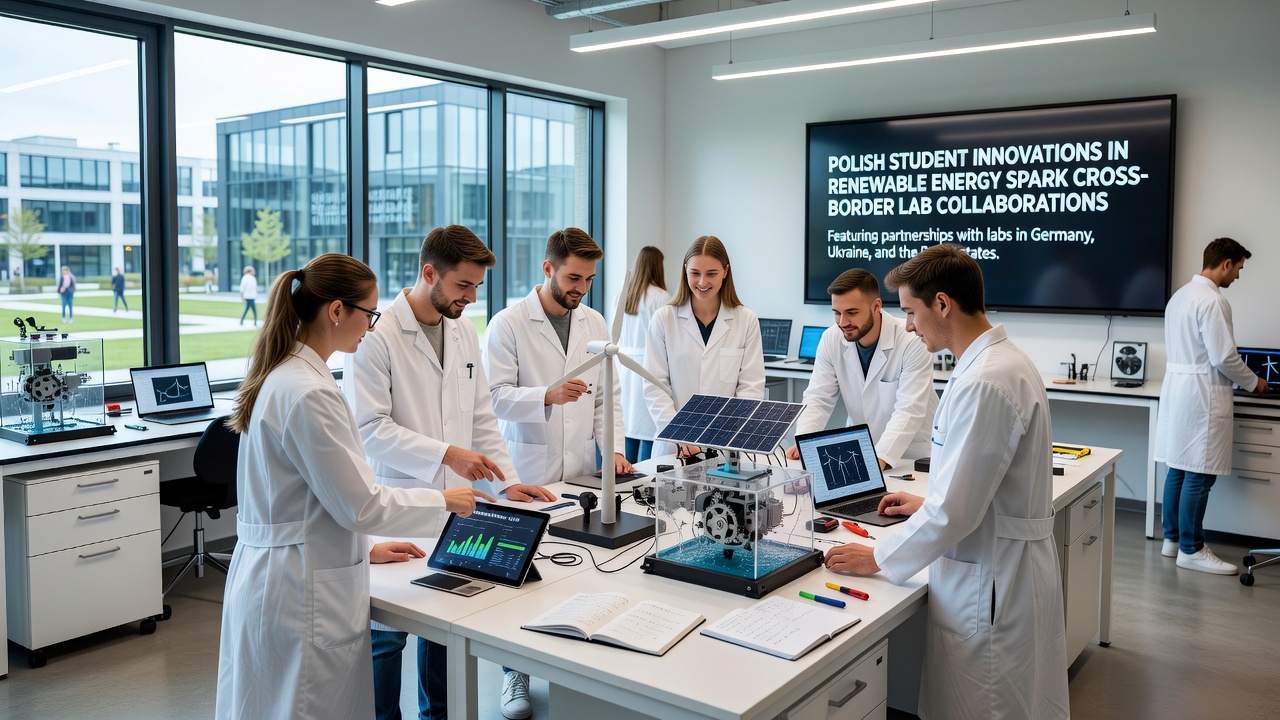
Polish university students have developed several renewable energy prototypes that prompted formal research agreements with laboratories in neighboring countries, and these efforts gained momentum through structured exchanges that began in 2024. Teams at technical universities across Poland focused on modular solar tracking systems, small-scale wind turbine blades made from recycled composites, and microbial fuel cells for wastewater treatment, each project drawing interest from institutions seeking practical applications rather than theoretical models alone.
Key Innovations Driving Interest
Researchers at Warsaw University of Technology created a low-cost dual-axis solar tracker that adjusts panels using recycled smartphone components, while a group at Gdańsk University of Technology engineered turbine blades that maintain efficiency in Baltic Sea wind conditions. Data from the Polish Ministry of Climate and Environment shows student-led filings for renewable patents rose 18 percent between 2023 and 2025, with cross-border inquiries increasing in parallel. Those who've examined the prototypes note that the designs emphasize affordability and local material sourcing, features that appealed to partners in Germany and Sweden where similar supply-chain constraints exist.
Another project at Wrocław University of Science and Technology produced a compact anaerobic digester suited for agricultural waste, and testing revealed methane yields 12 percent above standard small-farm units. Observers note these results prompted an invitation to a joint pilot with a Danish research station focused on circular economy methods. The ball's in the court of university administrators now to formalize equipment-sharing protocols that emerged from these early demonstrations.
Cross-Border Lab Agreements Take Shape
By mid-2025 several memoranda of understanding had been signed, including one between a Kraków-based student collective and a laboratory network in the Netherlands that specializes in grid integration studies. Figures from the European Commission's renewable energy monitoring platform indicate that such student-initiated contacts account for roughly 7 percent of new EU-funded energy pilots involving Polish institutions. And the pattern continued when a Lithuanian energy research center reached out after reviewing open-source schematics posted by the Polish teams.
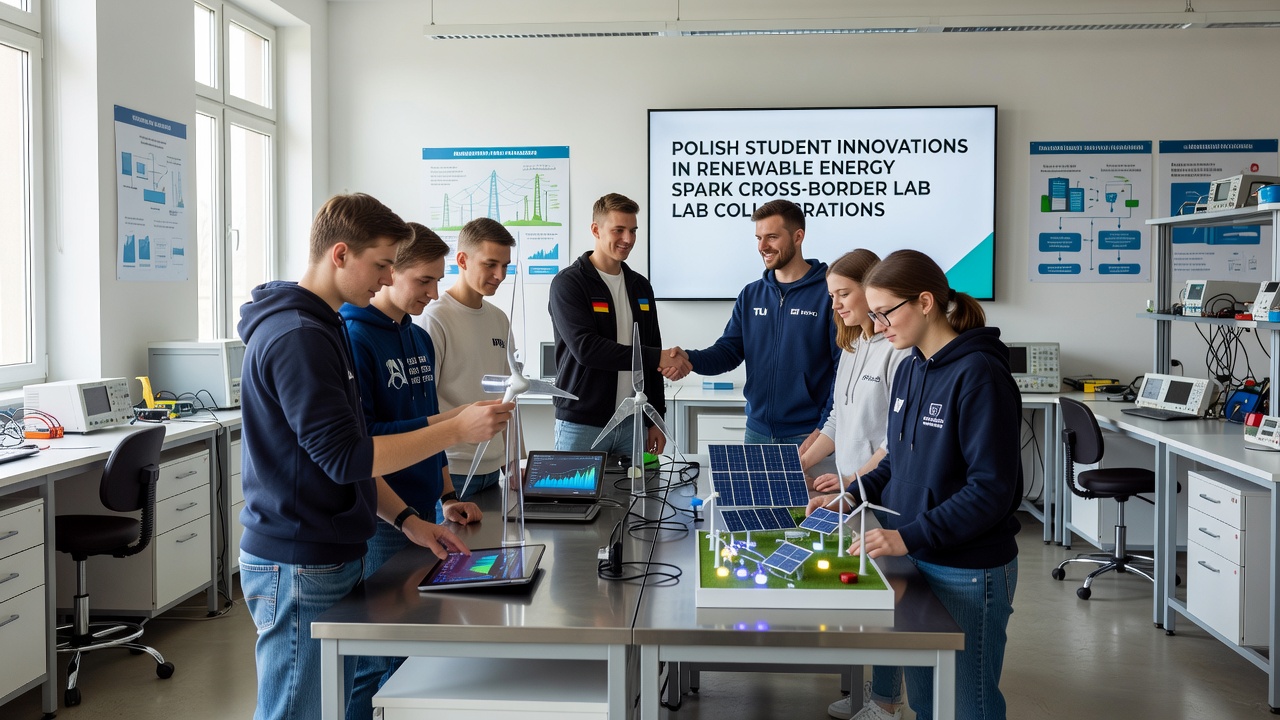
What's significant is how these partnerships moved beyond paper agreements into shared testing schedules. In October 2026 a joint workshop held in Poznań brought together students and lab technicians from four countries to calibrate monitoring sensors for hybrid renewable installations, and preliminary results showed improved data consistency across different climate zones. Experts have observed that the hands-on format reduced typical setup delays by several weeks compared with traditional academic exchanges.
Measured Outcomes and Supporting Data
Reports compiled by the International Renewable Energy Agency highlight that collaborative student projects in Central Europe produced measurable gains in prototype iteration speed when participants shared access to specialized wind tunnels and solar simulators. Polish teams contributed design tweaks that lowered material costs by an average of 9 percent in the shared trials. Those who've studied the collaboration logs point out that language barriers were mitigated through shared digital modeling platforms, allowing real-time adjustments without extensive travel.
One case involved a bioenergy sensor network developed in Poland and refined through remote sessions with an Austrian partner laboratory, resulting in a published dataset on seasonal performance variations. The writing's on the wall for broader adoption, as similar sensor arrays now appear in grant proposals submitted to national funding bodies in both countries. Research indicates these exchanges also increased publication rates among participating graduate students by nearly one-quarter over two years.
Future Directions for Continued Exchange
Additional rounds of prototype testing are scheduled for 2027, with emphasis on scaling the microbial fuel cell design for municipal use. Government agencies in Poland and the Baltic states have allocated modest seed funding to maintain the student-to-lab pipeline, and early indicators suggest the model could extend to hydrogen storage experiments already underway in Finland. Students continue to present findings at regional energy forums, where interest from additional laboratories remains steady.
Conclusion
Polish student innovations in renewable energy have established concrete pathways for cross-border laboratory work, supported by documented patent growth, joint testing events, and shared data outputs. The October 2026 workshop demonstrated practical coordination methods that other regions may examine, while ongoing agreements point to sustained activity rather than isolated projects. Evidence from multiple monitoring sources confirms the trend continues without reliance on any single institution or funding stream.